Retail AI agents — built for Boots, deployed on Azure.
Agentic capabilities across store operations, e-commerce, and corporate productivity. Deployed inside your Azure VNet. Governed from day one.
See the use cases →Where we see the biggest impact across Boots.
These are starting points for discovery — not a fixed scope.
Business 01 · Store (Health & Beauty)
Intelligent experiences that earn the visit — and operations that protect the margin.
Category 01 · Store Operations
Category 02 · Customer Experience & Margin Expansion
Business 02 · E-Commerce
From intelligence to execution — the full digital operations stack.
Category 01 · Intelligence
Category 02 · Execution
Business 03 · Corporate Productivity
The operational backbone — supply chain intelligence and corporate function automation.
Supply Chain
Corporate Functions
The Agentic OS intelligence stack — in action.
One co-pilot interface. Specialist agents handling the repeatable work underneath. Humans approve the moments that need judgment. The same loop — see, suggest, do, review, improve — runs across catalogue, creative, visibility, and storefront work.
Live product — Lyzr - Retail Agentic OS
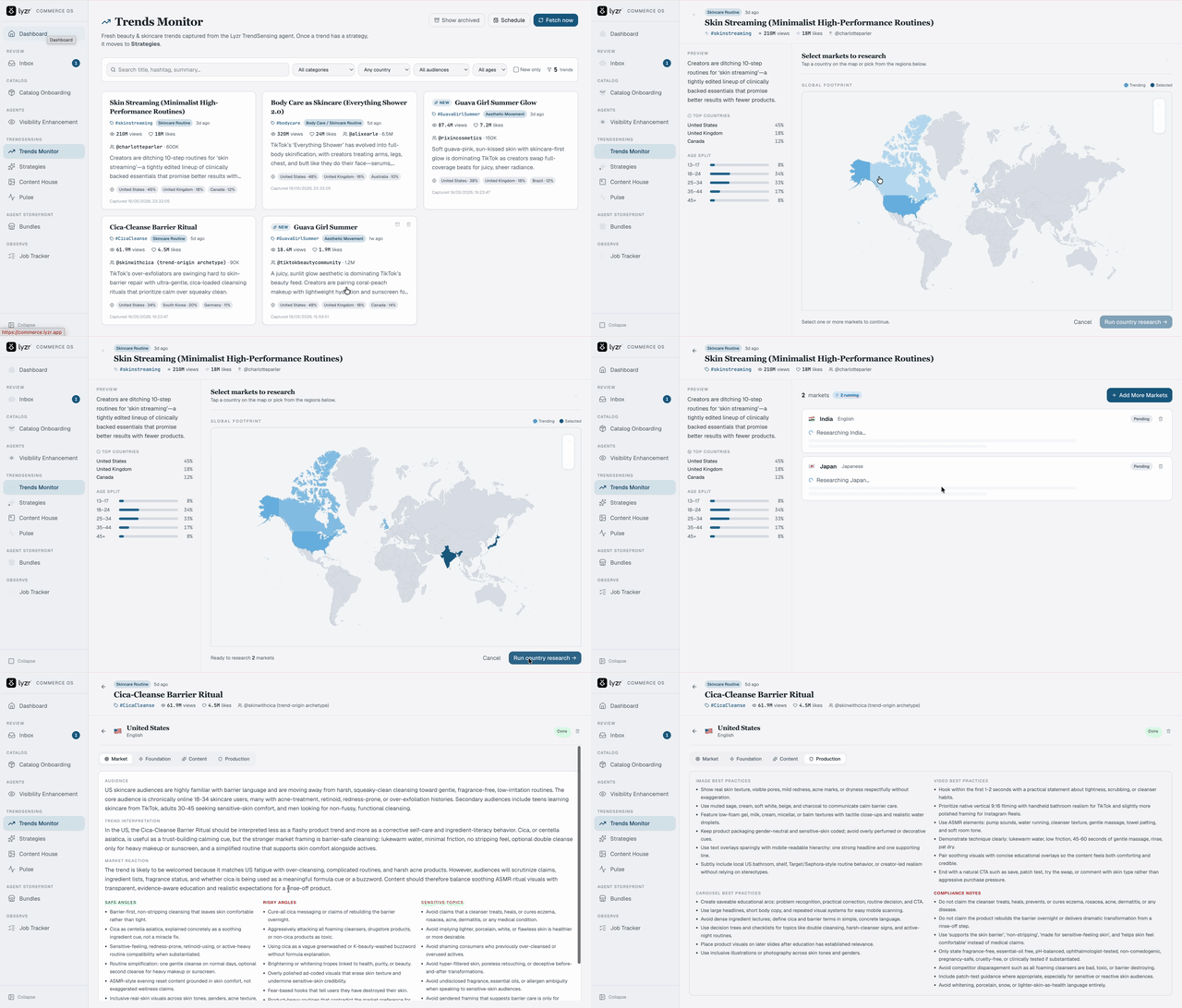
01
Trend to strategy
A trend signal becomes market research, then a strategy, then a creative handoff.
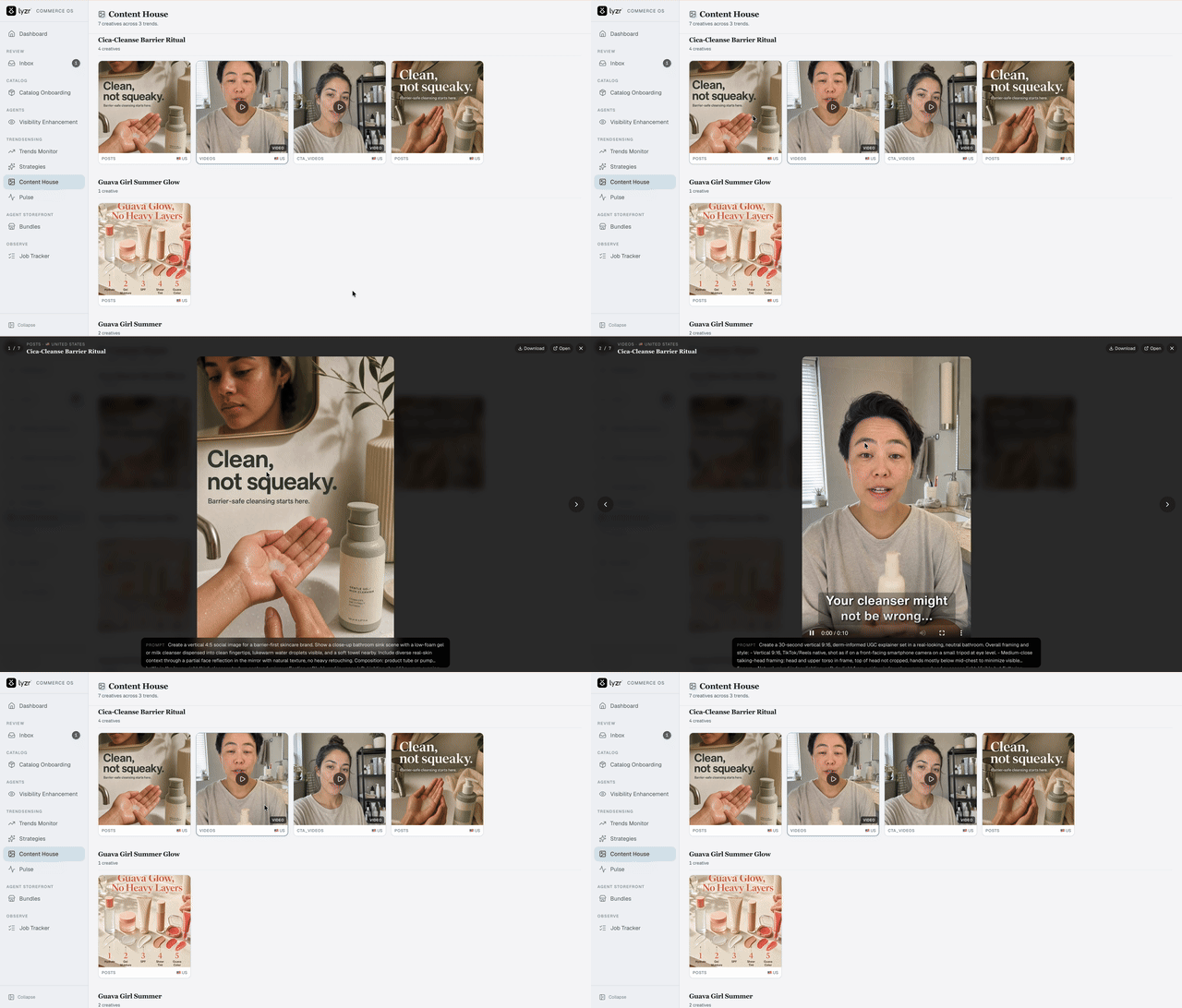
02
Content house
Generated assets grouped by trend and channel so review stays organised.
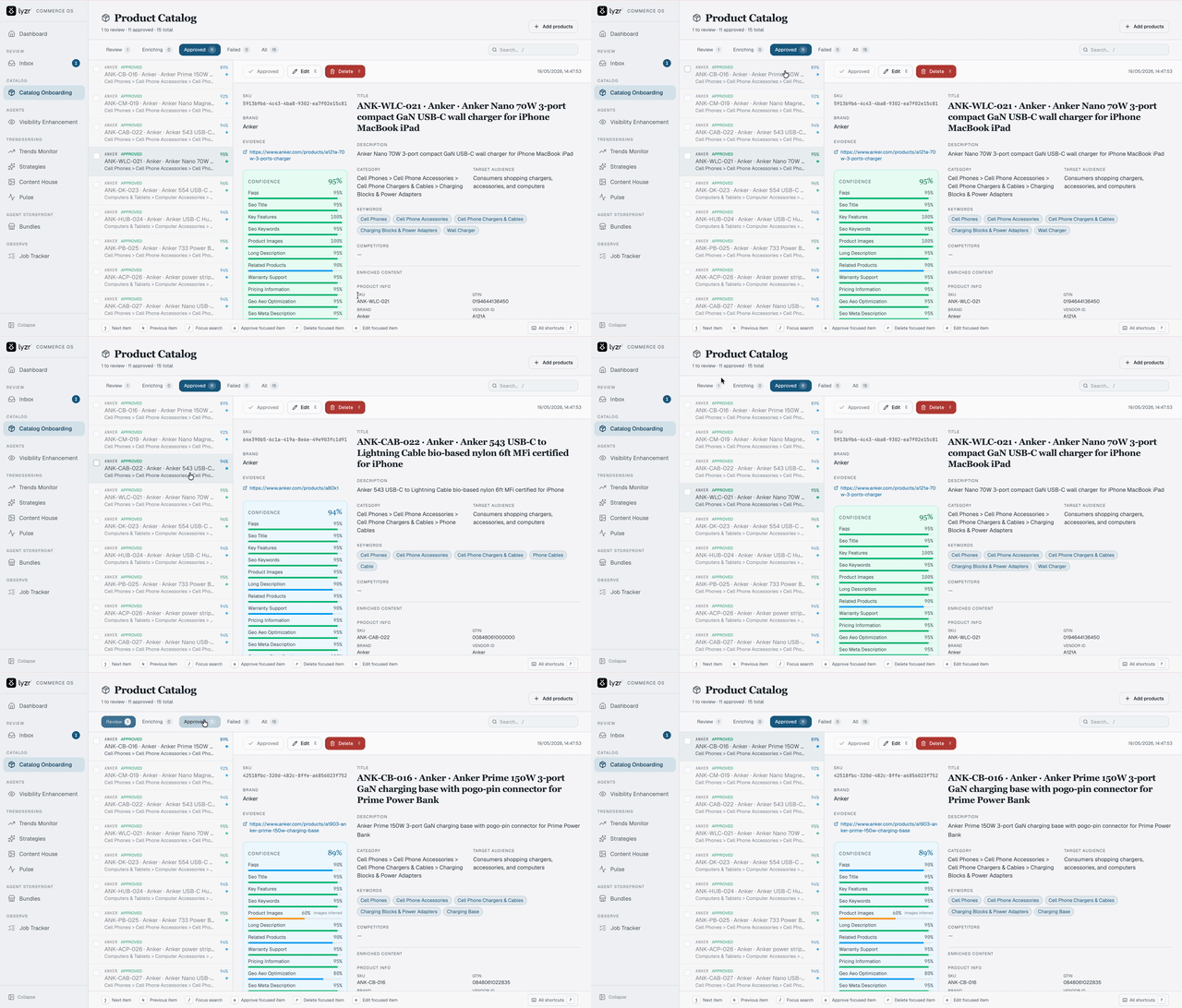
03
Catalogue lifecycle
From raw URL to enriched record to confidence-scored review queue.
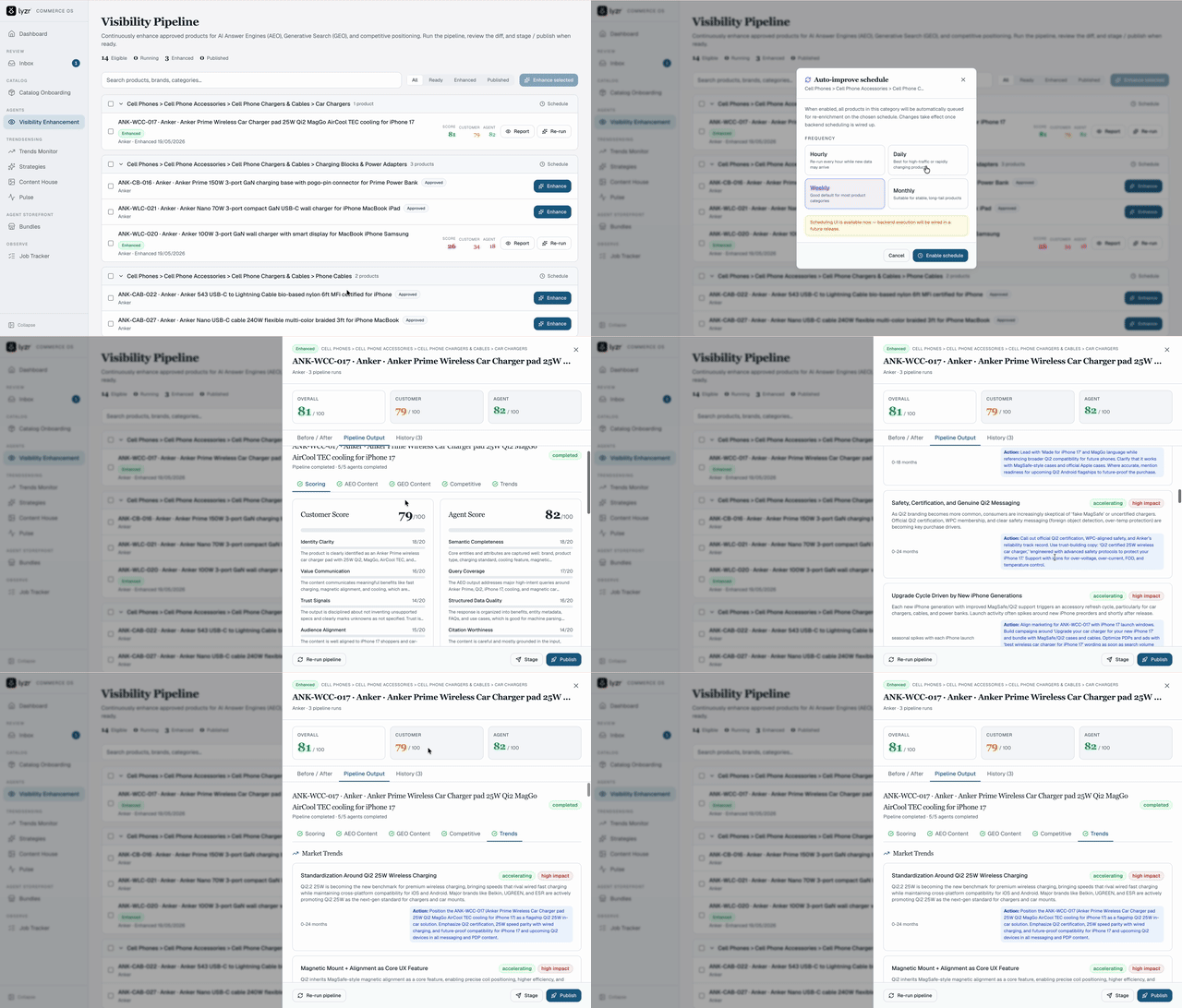
04
Visibility enhancement
AEO/GEO agents rewrite, score, and preserve the run history behind each change.
05
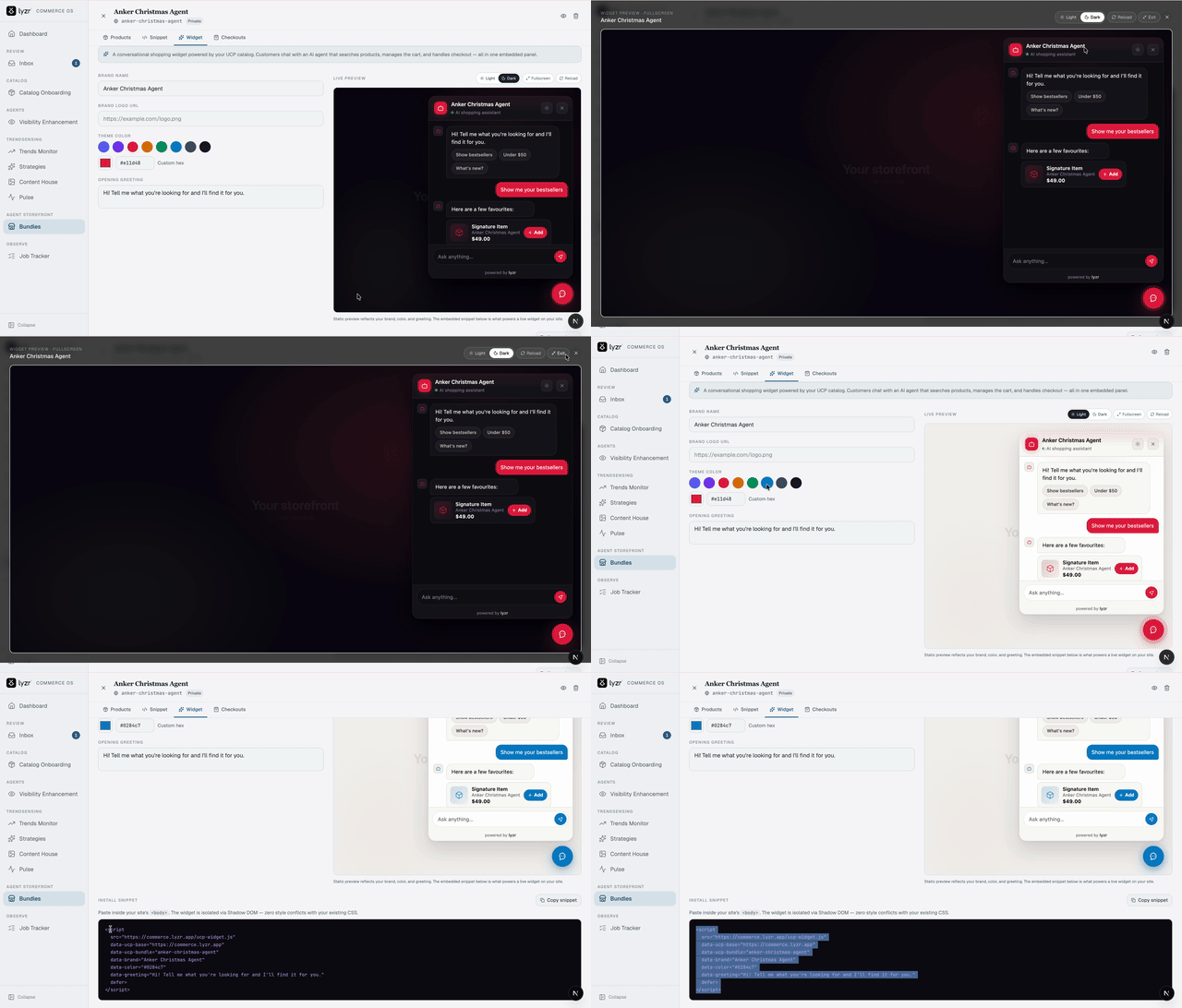
Agent storefront
Bundle setup becomes a live embeddable shopping agent with search, cart, and checkout.
06
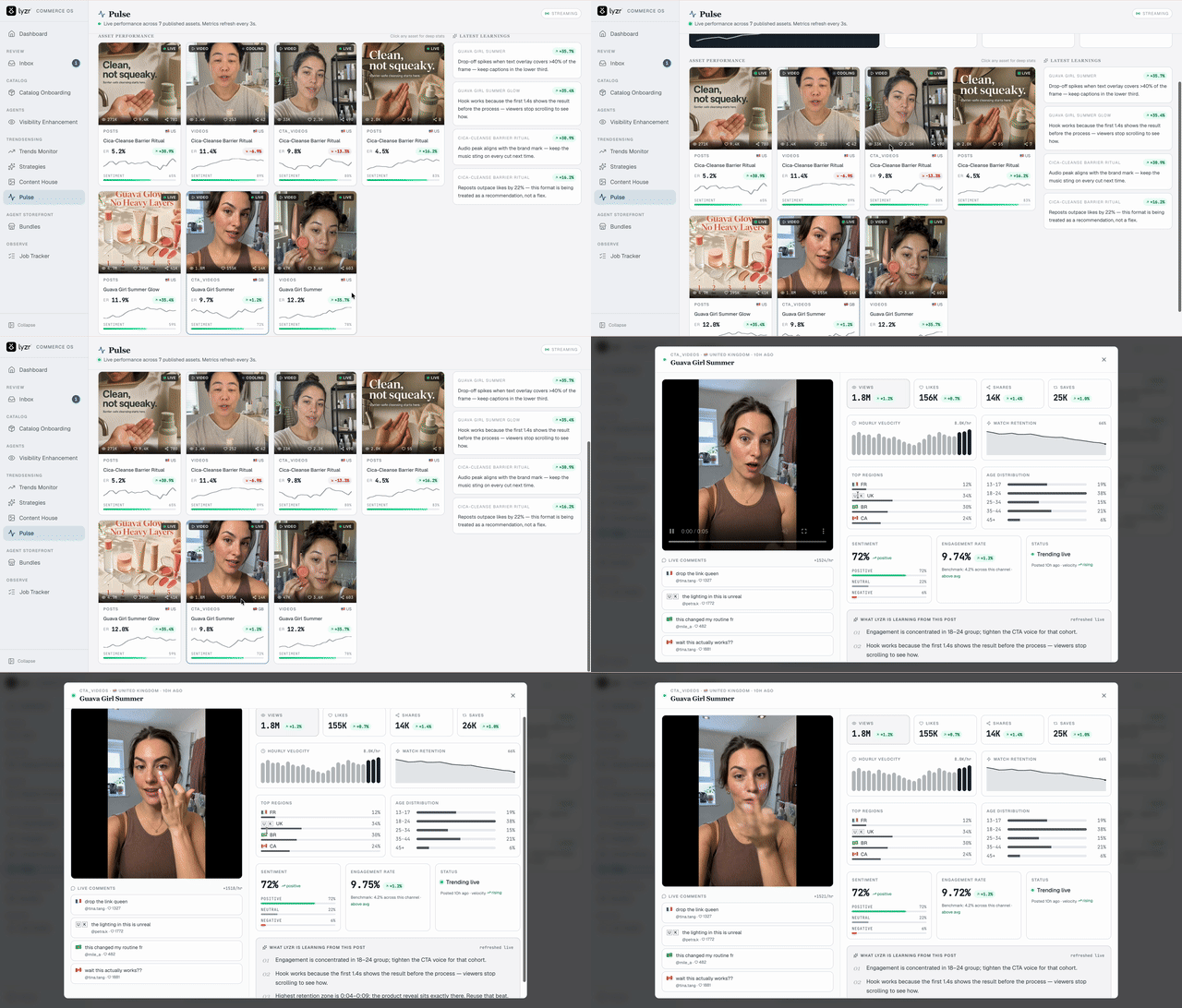
Engagement pulse
Published assets report performance back, closing the feedback loop into the next run.
07
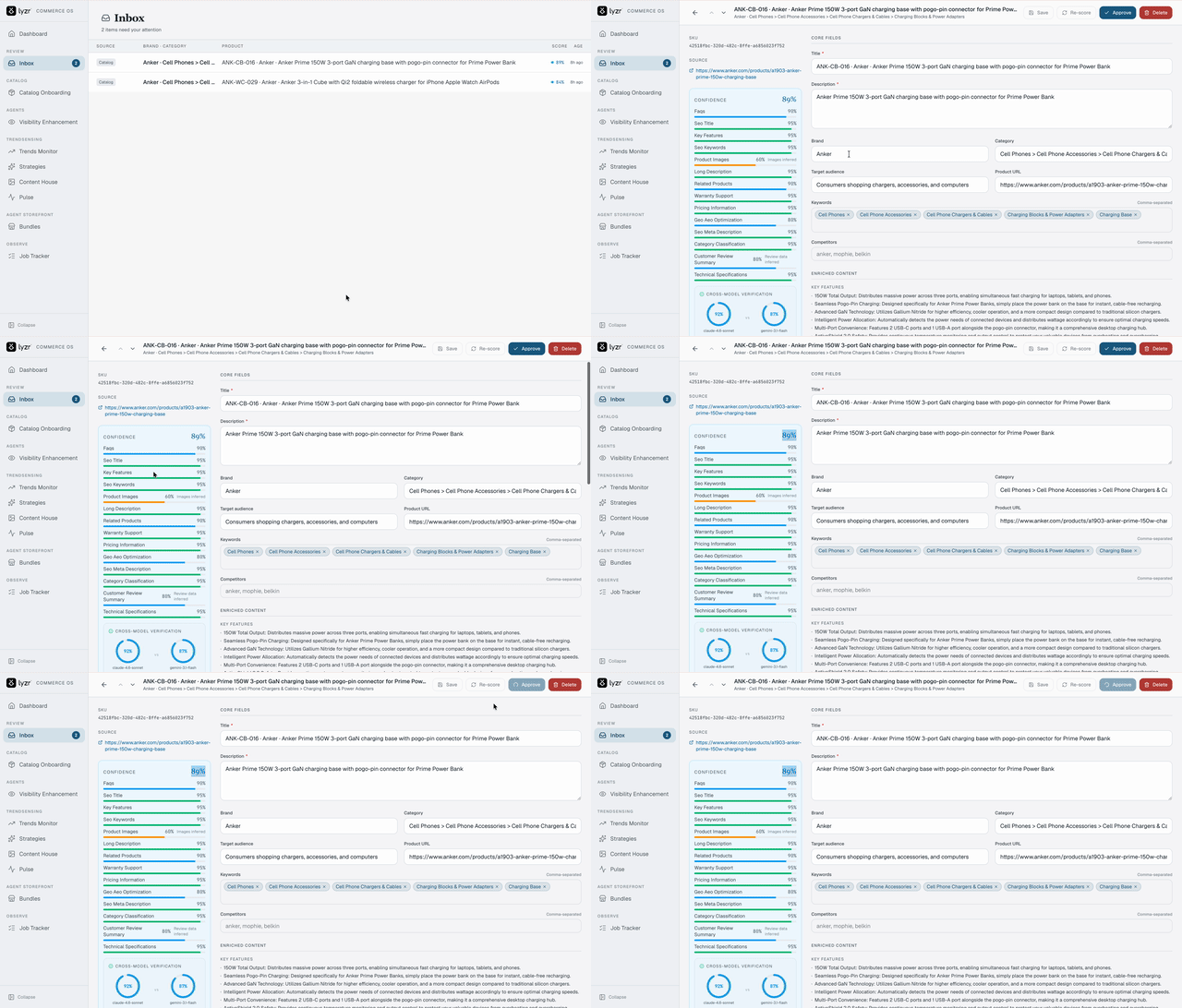
Decision inbox
The moments that need judgment, surfaced where the work is — not buried in a sidebar.
How to get the best return from agentic transformation — choose a delivery model where use cases compound, not just add up.
Boots doesn't have a single AI problem — it has a portfolio. Store and e-commerce each need distinct agents, but they share the same customer data, the same compliance requirements, and the same operational infrastructure. The question isn't what to build. It's how to build at a pace and cost that compounds rather than multiplies.
01
Speed
First agent in weeks. All platform modules — orchestration, memory, governance, audit — ship day one. No infrastructure assembly before the first agent ships.
02
Compounding economics
Each agent inherits the intelligence graph, tool connections, and compliance patterns of the ones before it. The cost curve bends down with every build instead of staying flat.
03
Independence
Pair-build from day one. Training is built into delivery. The goal: Boots builds agents on the workbench without Lyzr.
One workbench. Three modes — Plan, Execute, Improve.
A workbench that sits on top of your existing Azure stack and threads through your operational systems. Plan turns strategy into scoped agent briefs. Execute deploys agents through a governed pipeline. Improve feeds outcomes back so every cycle starts with better context than the last.
Mode 01 · Plan
From strategy to scoped agent brief.
Define the use case, map data sources, set governance mode, identify success metrics. The workbench surfaces what's available — connected systems, existing knowledge graph, governance patterns from prior agents — so planning starts with context, not a blank page.
Mode 02 · Execute
Agents do the repeatable work. Humans approve what matters.
Specialist agents carry out the workflow — enrichment, analysis, recommendation, orchestration. The decision inbox surfaces moments that need human judgment. Everything else keeps moving. Every step writes an auditable file.
Mode 03 · Improve
Every outcome becomes context for the next run.
Approved edits, rejected drafts, and measured outcomes feed back into the knowledge graph. The system gets sharper with use. What worked in one value stream becomes available to the next.
Screenshots below are representative UI for illustration purposes.
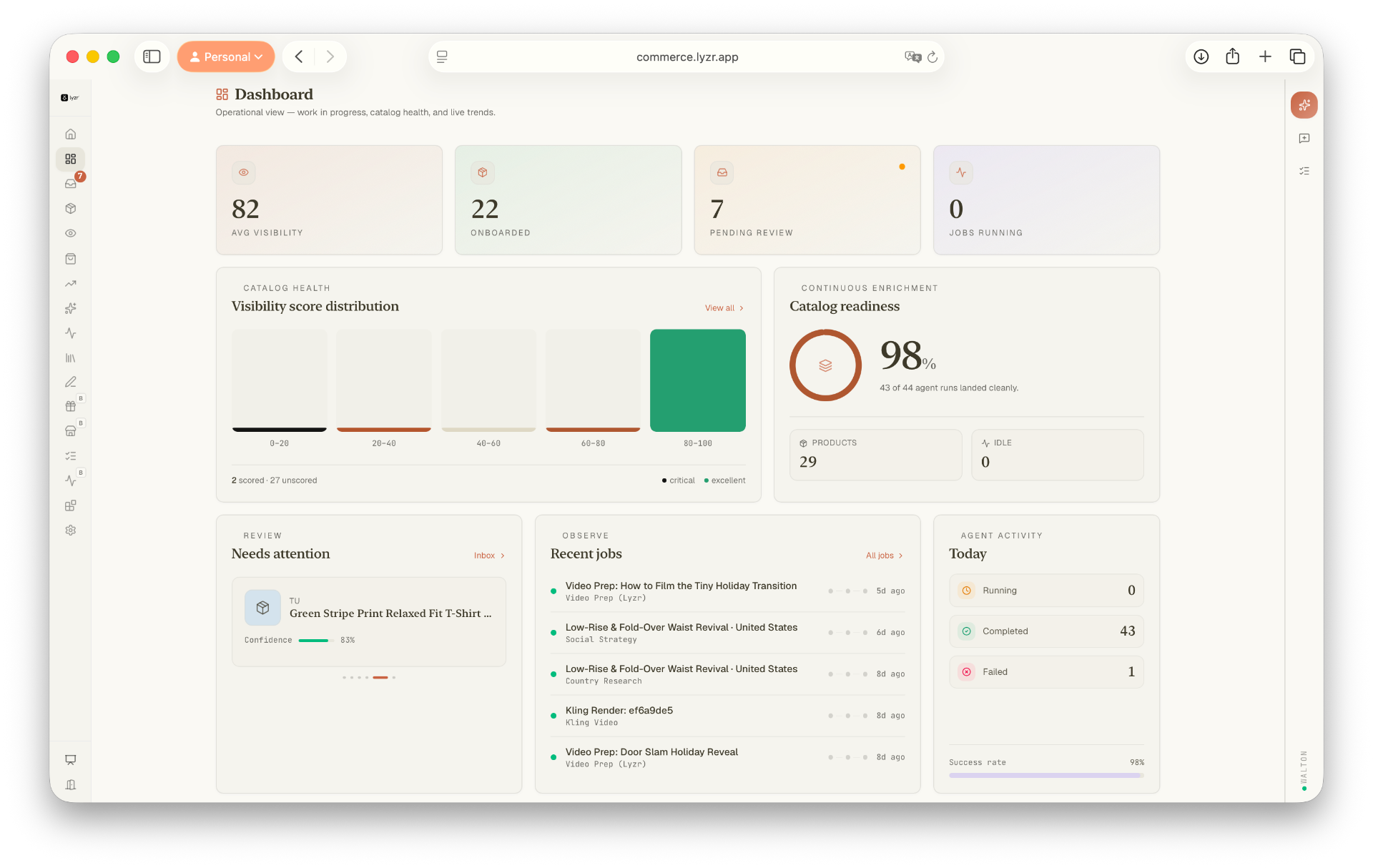
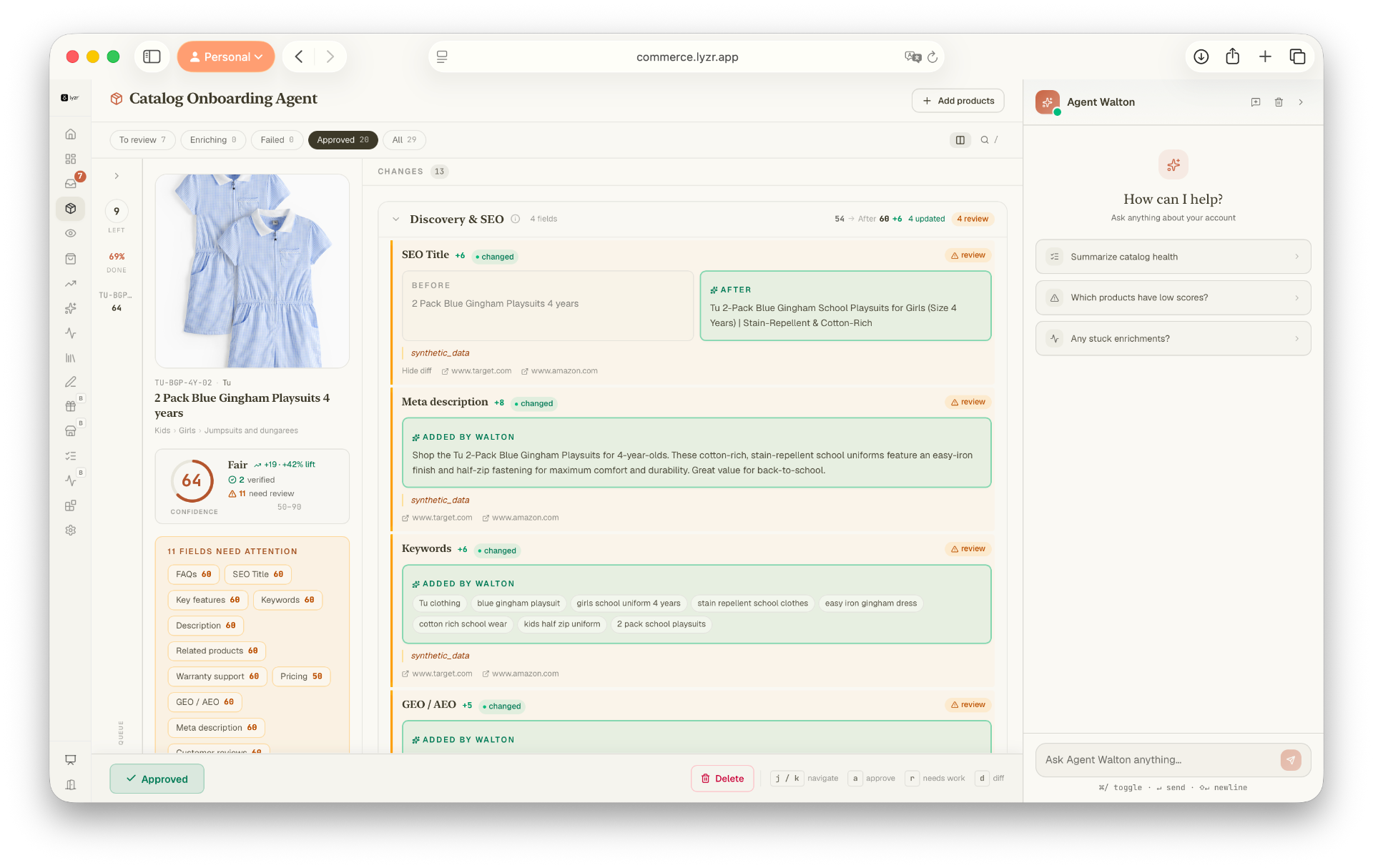
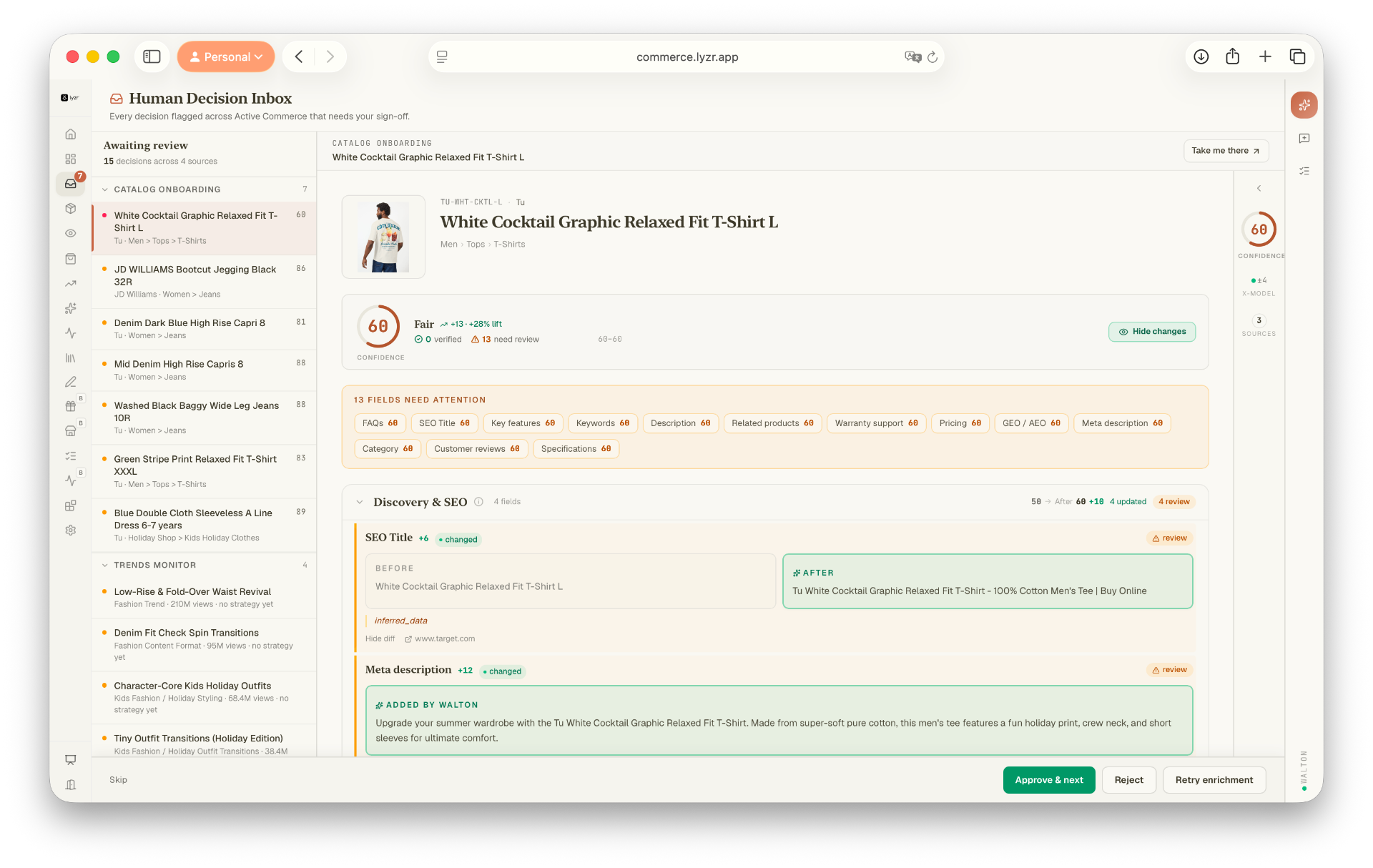
How it works — from brief to production.
A governed pipeline that walks each agent from scope to deployment. Human checkpoints at every decision point. Nothing reaches production without passing simulation, QA, and compliance.
Boots workbench
One surface across the work. The team scans, then decides where to spend judgment.
Co-pilot
Single point of conversation. Routes, runs, explains, and pauses for approval.
Specialist agents
Discrete agents per domain. Each carries its own tools, prompts, and run history.
Memory & review
Approved edits, rejected drafts, and campaign learnings persist as reusable context.
Boots systems
Product data, pharmacy records, loyalty, creative, checkout — connected, not duplicated.
Request lifecycle
What happens between a prompt and a published outcome.
Seven stages. Three actors — the human, the co-pilot, the specialist agent. Every stage is persisted so the team can inspect a step, replay a run, or hand a decision back.
Ask
Prompt, click, or scheduled trigger.
Plan
Picks the workflow, drafts the steps, shows reasoning.
Run
Specialist agent calls tools, produces draft output.
Persist
Run trace and intermediate state written to memory.
Review
Decision inbox — approve, revise, reject with note.
Resume
Folds the decision back into the running workflow.
Learn
Outcome becomes context for the next request.
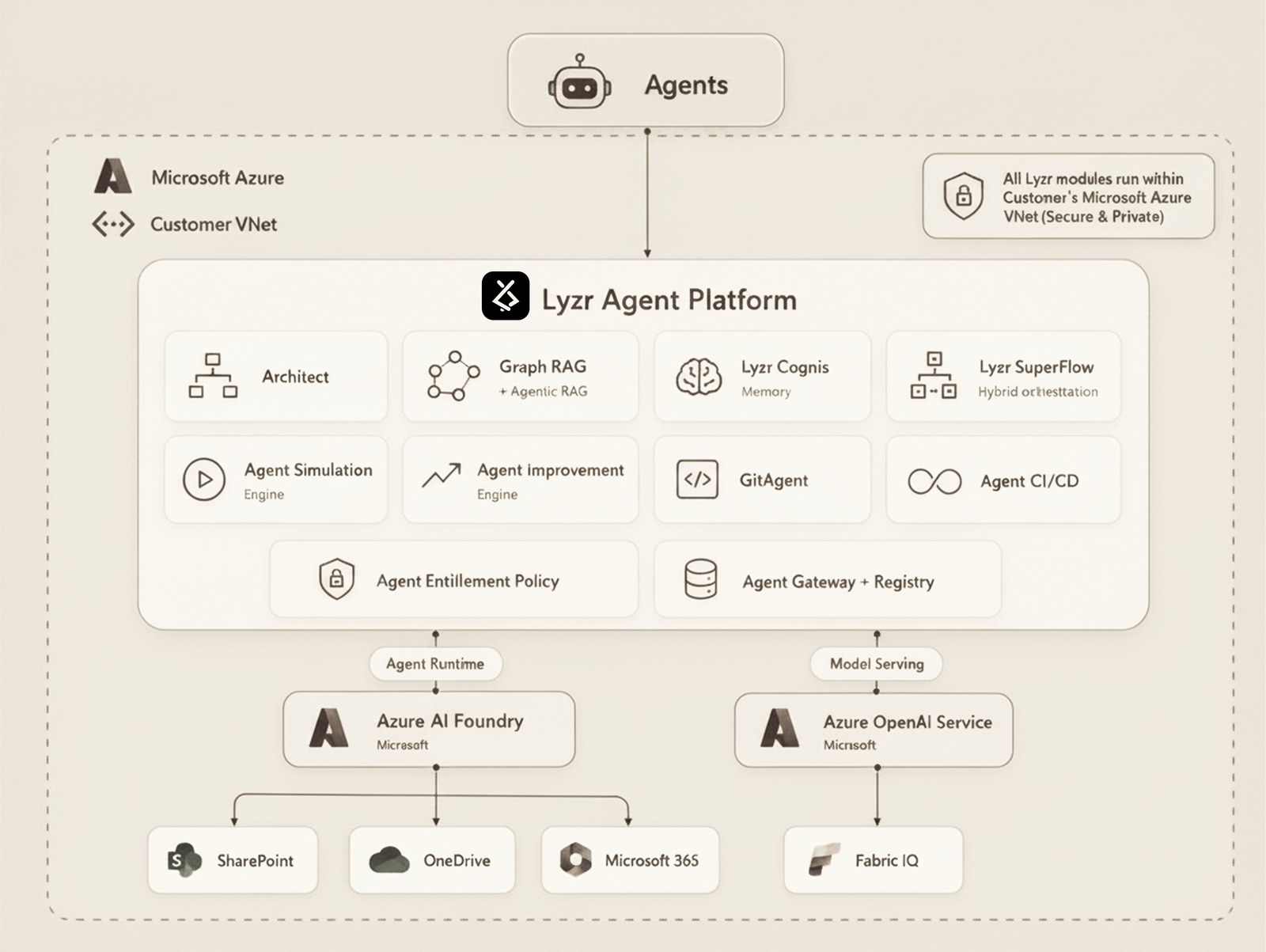
Behind the scenes — how Lyzr builds enterprise AI on Microsoft Azure.
All Lyzr modules run within the customer's Microsoft Azure VNet — secure and private. Agents connect into the Lyzr Agent Platform, which sits alongside Azure AI Foundry and Azure OpenAI Service, with native links into SharePoint, OneDrive, Microsoft 365, and Fabric IQ.
Memory
Cognis persistent memory
92.4% accuracy on LongMemEval. Customer journeys span weeks across pharmacy, beauty, and loyalty touchpoints — all contextual, all persistent.
Orchestration
SuperFlow hybrid canvas
LangChain, Microsoft AI Agents, GitAgent, Vertex ADK — all composable into one versioned, deployable workflow. Bring forward what's already built.
Safety
ASIM simulation + CI/CD
Test against thousands of real-world cases before production. Non-prod → pre-prod → production with compliance approvals and instant rollback.
Two questions a business audience really asks.
Will an agent make a decision a human should make? And how do we know what the agent did?
Question 01 · Will an agent make a decision a human should make?
A calibrated autonomy ladder, mode by mode.
Every agent operates at a specific level of autonomy — set during build, enforced at runtime, recorded in the audit trail.
Mode 01
Assist
AI suggests · Human decides
Agent surfaces context, drafts a recommendation. Human reads, decides, acts.
Example: regulatory monitoring agent surfaces a GPhC policy change.
Mode 02
Co-pilot
Agent drafts · Human approves
Agent prepares decisions or proposed actions. Human approves before execution.
Example: Pharmacy First clinical triage, beauty consultant copilot.
Mode 03
Semi-autonomous
Bounded execution · Exceptions reviewed
Agent executes within policy guardrails. Edge cases flagged.
Example: personalisation scoring, replenishment scheduling.
Mode 04
Autonomous
Full orchestration · Human audits
Agents act within policy without per-action approval. Humans audit by sampling.
Example: reserved. Promoted only when audit history justifies it.
Question 02 · How do we know what the agent did?
Four artefacts. One audit trail.
Every decision backed by four on-disk artefacts an auditor, regulator, or operations leader can open, read, and re-run.
01
Pre-check
Every rulebook, fresh and on the record.
Before any rule fires, the workbench confirms it's the current version.
Across businessesGPhC guidelines, NHS protocols, Advantage Card terms, retail media compliance — all version-tracked.
02
Ledger
Each rule, a clear verdict and a suggested fix.
Every rule produces a verdict in plain English — what tripped, exactly what to change.
Across businessesClinical pathway requires pharmacist sign-off. Cross-category recommendation flagged for Rx interaction.
03
Audit trail
Every decision, in order, never rewritten.
Every flag, escalation, and human override on one timeline. Re-runs append — nothing mutated.
04
Handoff
One audit pack, stapled to the record.
When an agent action completes, a tamper-evident audit pack hands off to Boots' systems of record.
Technology alone won't get you there.
The platform compounds value over time, but only if Boots' teams know how to use it, what to build on it, and how to keep building once Lyzr steps back.
Enabler 01 · Applied AI
Owns end-to-end outcomes.
A full-stack outcome team embedded into Boots. Not vendor support — an extension of your team that ships agents to production.
We bring the disciplines — you own the outcome. Every agent ships to production, not to a roadmap.
The team builds, simulates, and deploys agents on the workbench. They report into Boots' structure and operate alongside existing teams.
Enabler 02 · Consulting
Frames the portfolio.
Transformation consultants who identify, score, sequence, and build the business case for every agent in the portfolio. Boots validates. Lyzr builds.
Three analytical artefacts — scoring, sequencing, wave structure — produced during discovery.
Consulting works with pharmacy, store, and digital teams to validate use case candidates, map data availability, and confirm sequencing so each wave inherits the infrastructure of the one before it.
Enabler 03 · Training
Builds your self-sufficiency.
Internal enablement so Boots' teams can build, deploy, and govern agents on the workbench without us.
Knowledge transfer is built into the engagement, not added at the end.
Training operates on two horizons — immediate (working sessions during the engagement) and structured (curriculum for teams who'll own the platform).
Boots at a glance — for reference.
Background context on the three businesses, the compounding advantages, and the transformation pattern. Expand any section below.
| Business | Revenue share | Key metrics | Primary challenges |
|---|---|---|---|
| Pharmacy | ~1/3 of total | 4,700+ pharmacists, 200+ healthcare services | Digital pharmacies growing 68% YoY, £340M NHS expansion, independent prescribing from autumn 2026 |
| Store (H&B) | ~2/3 of total | 1,800+ stores, 185+ beauty halls, 1,500+ beauty specialists | Specialist H&B contracting 1.5%, Sephora/SpaceNK investing, undifferentiated middle squeezed |
| E-commerce | 20%+ of retail sales | 17M+ Advantage Card members, 8.6M app users, #1 UK H&B website | TikTok Shop 4th largest beauty retailer, Amazon expanding, premium beauty shifting online |
Services: Health services, beauty services, and Boots Media Group — the margin expansion path.
Customer access: 1,800+ stores, boots.com at 20%+ of retail, pharmacy network at national scale.
| Strategic pillar | Pattern | Boots status | Progress |
|---|---|---|---|
| 1. Consolidate the legacy | Rationalise the store estate | Store rationalisation programme underway | In progress |
| 2. Build the margin engine | Services revenue + data monetisation | Boots Media Group, NHS clinical services, premium beauty | In progress |
| 3. Go omnichannel | Integrate physical + digital | boots.com at 20%+, beauty halls, composable architecture | In progress |
| 4. AI & cloud as accelerator | Deploy agentic capabilities at scale | The execution partner and platform decision | Open |
| 5. Culture as infrastructure | Colleague engagement alongside financials | Colleague engagement programs in place | In progress |
The path from here.
| Step | What | Timeline |
|---|---|---|
| Discovery | Lyzr consulting works with pharmacy, store, and digital teams to validate use case candidates, map data availability, and confirm sequencing. | [TBD] |
| First agent | One agent, one value stream, production-ready. Demonstrates the workbench, the governance model, and the compounding principle. | [TBD] |
| Portfolio build | Each subsequent agent inherits the infrastructure, knowledge graph, and governance patterns of the ones before it. | [TBD] |
The mandate is clear. The data asset is built. The strategic moment is now.
The conversation we'd like to have: which value stream first, and how fast.